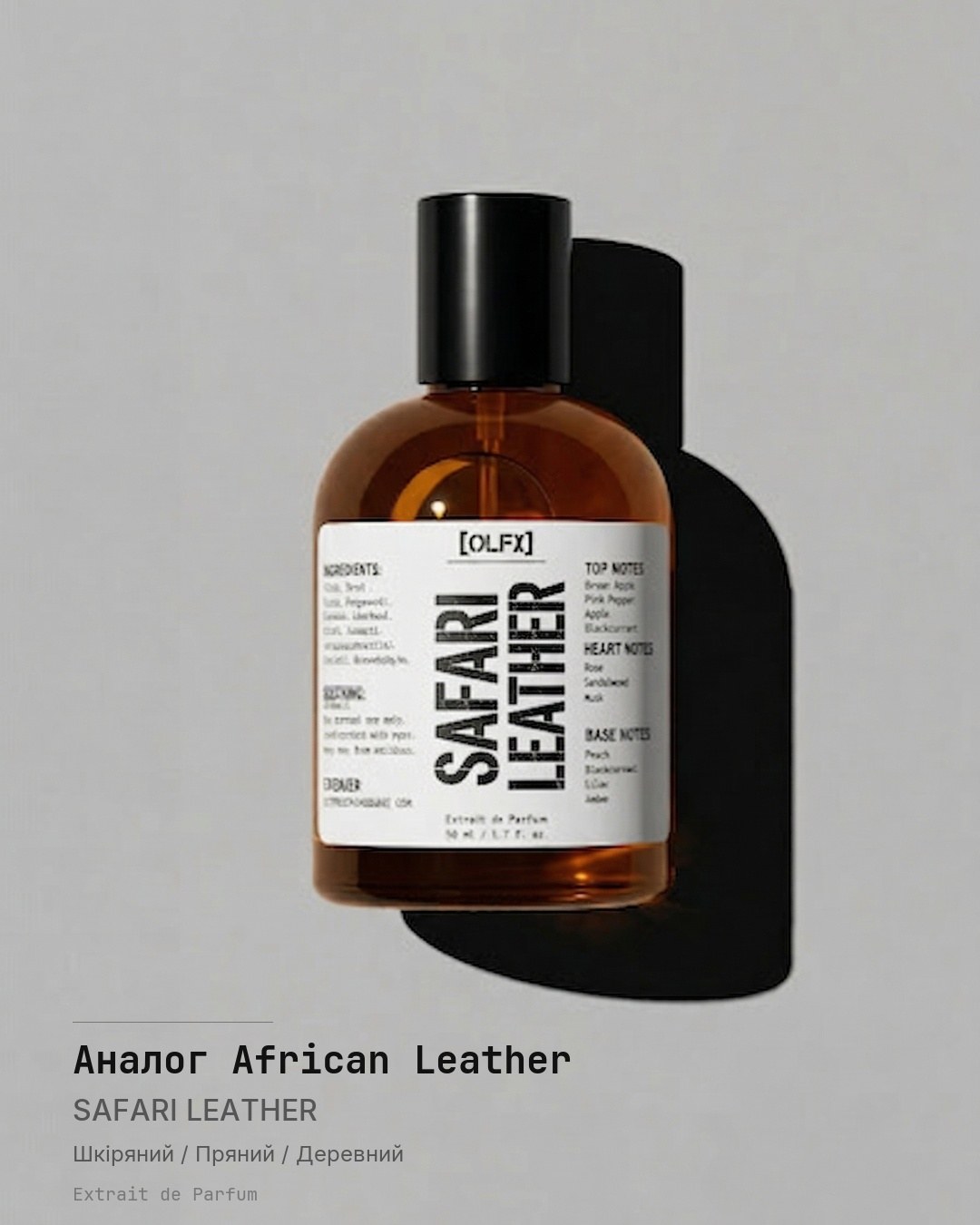
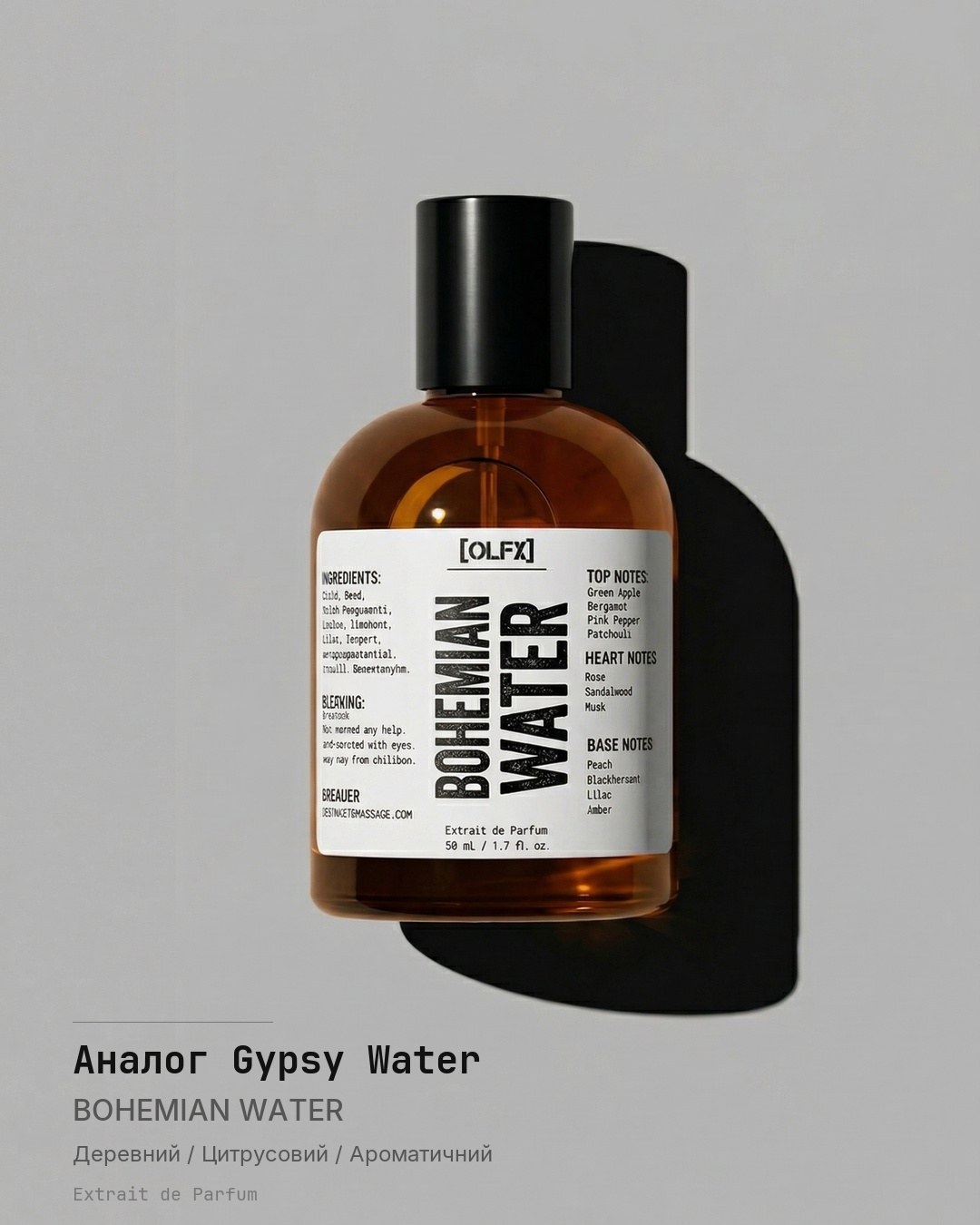
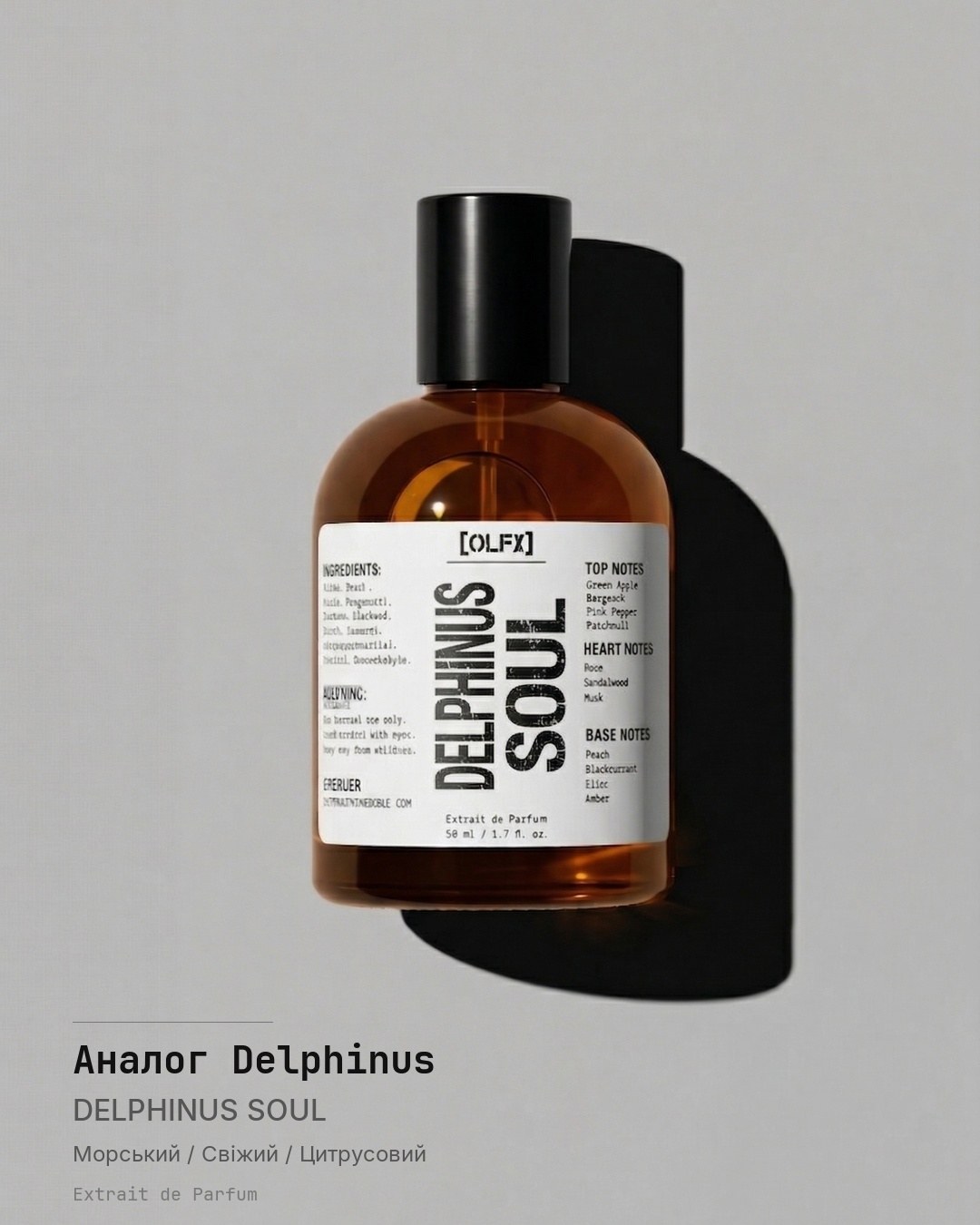
Fragrance shopping has an honesty problem: originals cost hundreds of dollars, and the alternatives are often sold with vague promises. OLFx takes the opposite route. Every product on this site names the original fragrance whose scent direction it interprets, states plainly that it is an interpretation rather than the original, and gives you two clear formats to wear it in. This page explains how the catalog works and where to start.
What is a perfume dupe?
A perfume dupe — also called a fragrance dupe — is an independent fragrance composed to follow the recognizable scent direction of a well-known original — its key accords and overall character — while remaining a separate product under its own brand.
A dupe is not a counterfeit: it does not copy packaging, does not carry the original's name on the label, and does not claim to be the original. What it offers is the scent direction — the cherry-almond warmth, the smoky sandalwood, the mineral sweetness — at a fraction of the original's price. The practice is legal and decades old; what separates serious houses from junk is transparency about what you are buying. Our plain-language guide to what a perfume dupe actually is covers the vocabulary, and the legal side is explained separately.
What can you shop at OLFx?
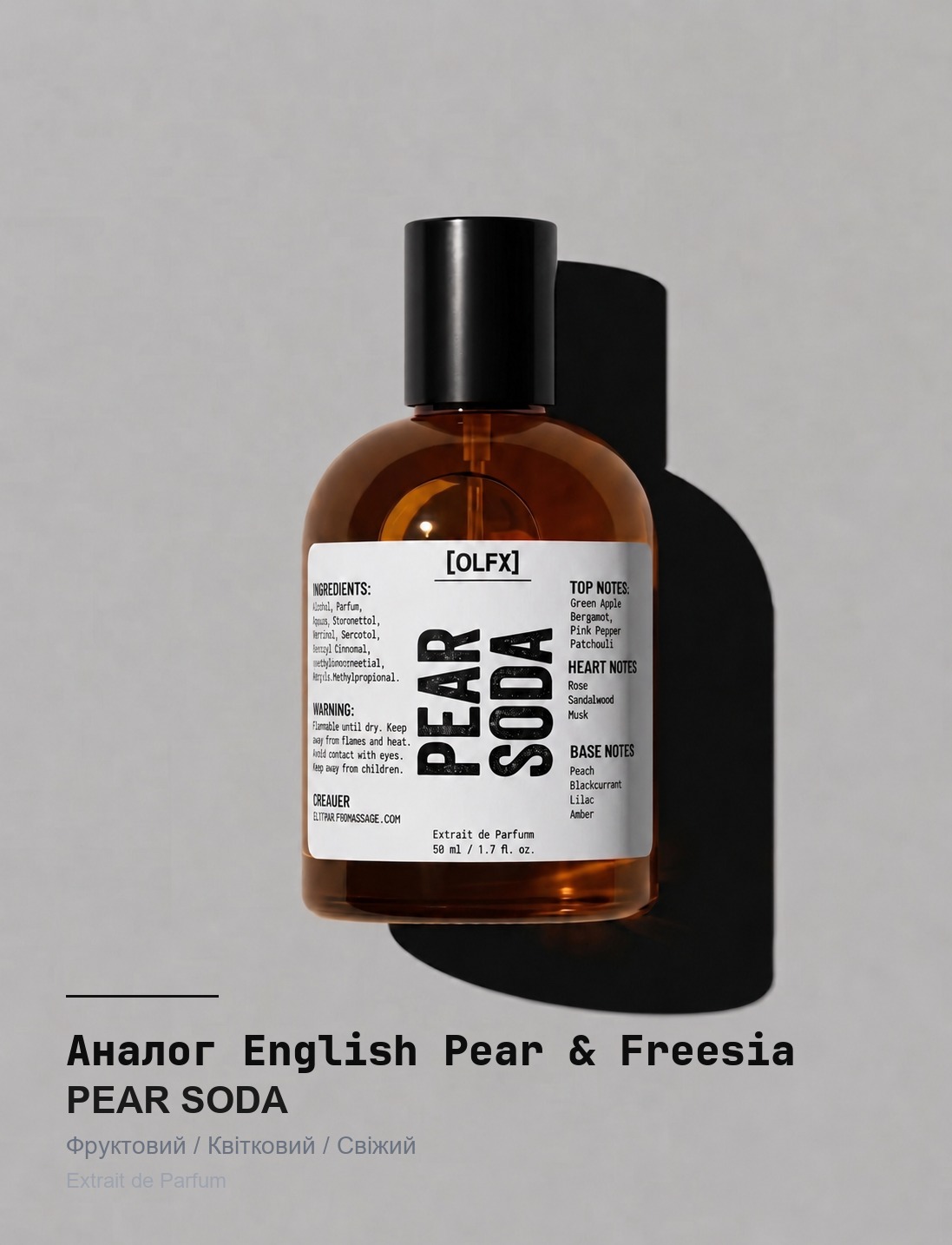
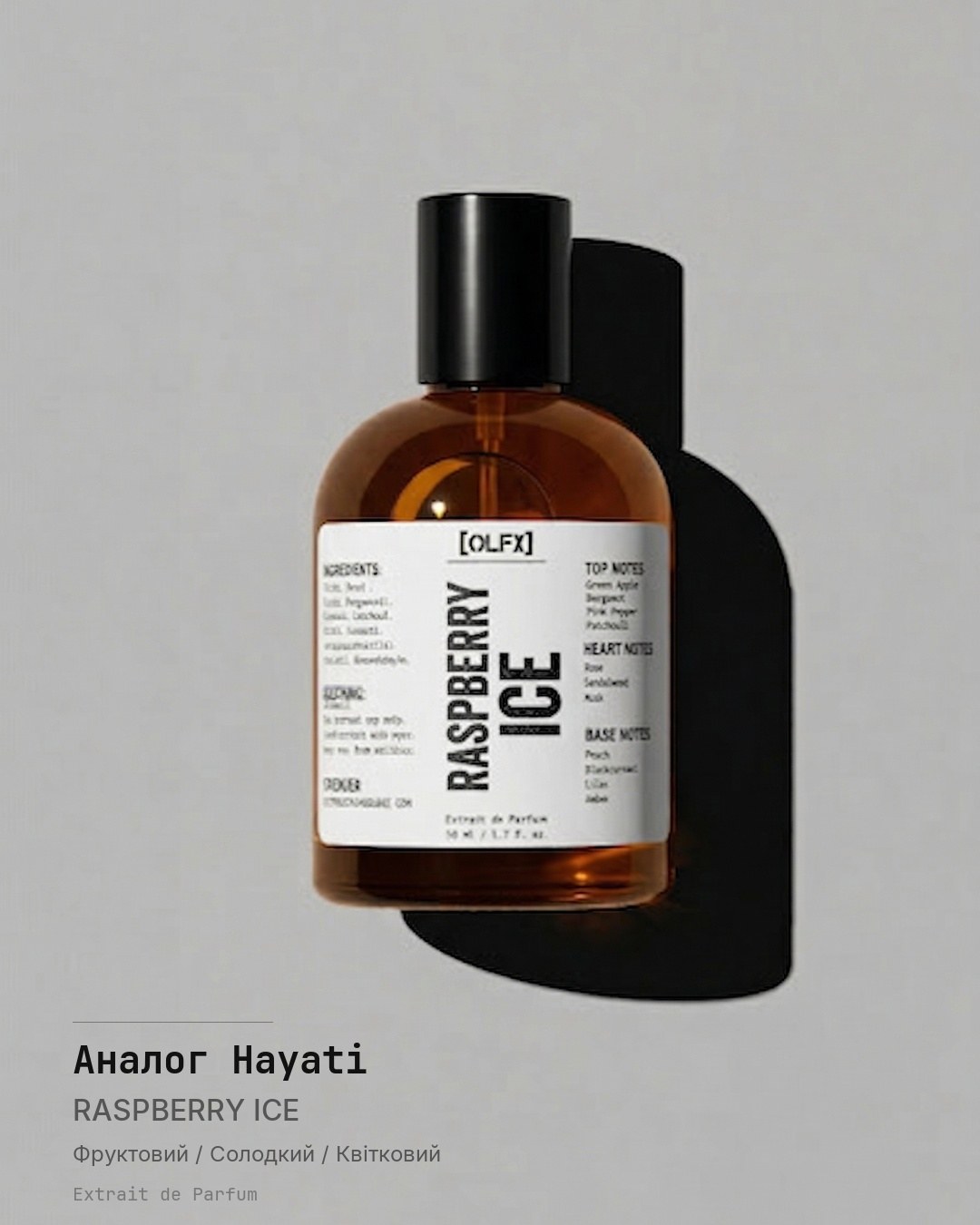
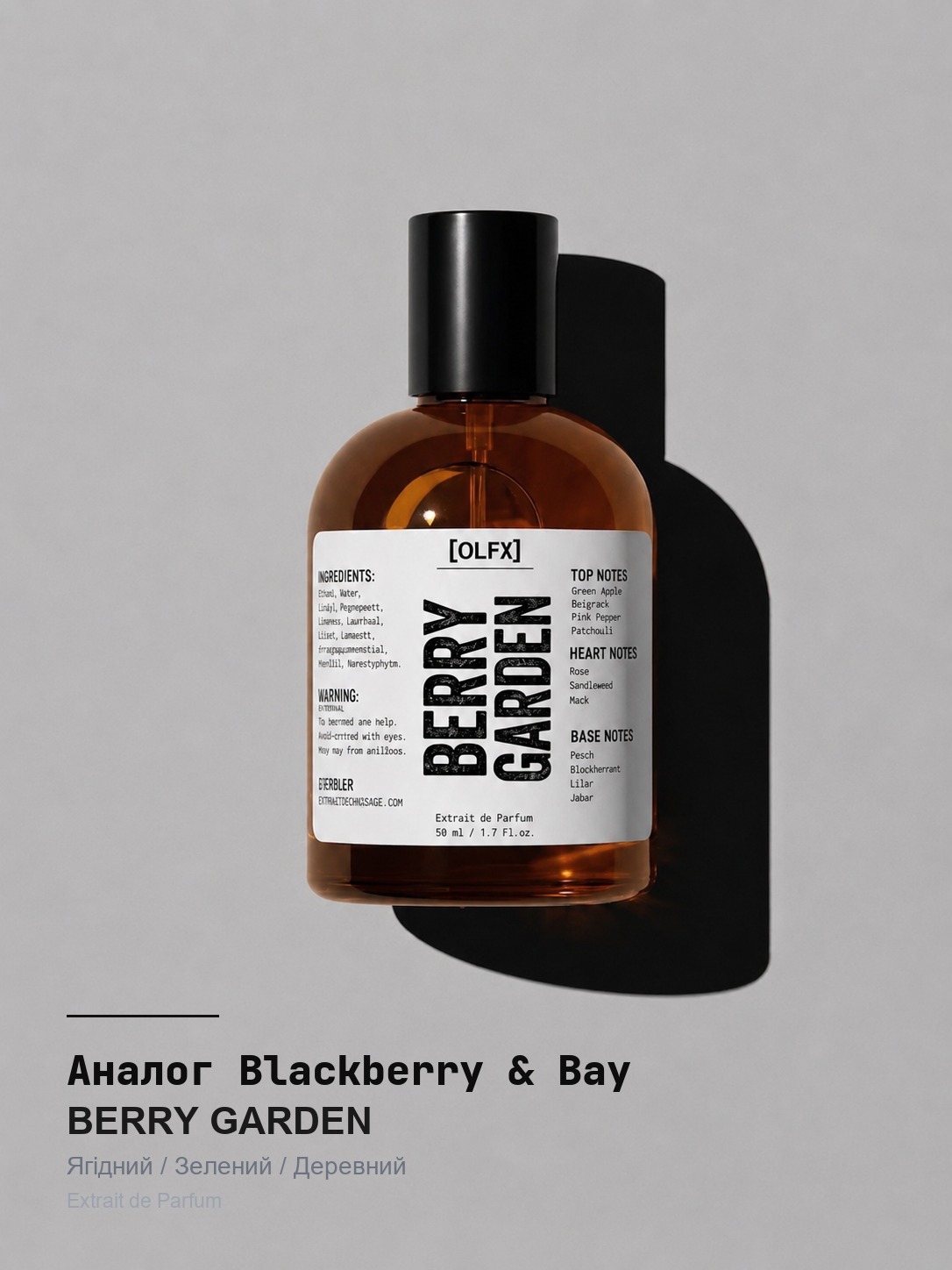
The catalog is built around 140 original fragrance references — designer-inspired and niche fragrance dupes, from houses like Tom Ford, Maison Francis Kurkdjian, Creed, and Byredo — each interpreted as an OLFx Extrait de Parfum composition available in two formats.
Instead of browsing anonymous product codes, you navigate by names you already know. Every card carries its reference in plain text: Baccarat Rouge 540, Creed Aventus, Santal 33, Lost Cherry, Sauvage, Delina, Black Afgano and more than a hundred others. The references span the whole map of modern perfumery — gourmand sweetness, dry woods, skin musks, dark ouds, fresh citrus — and the full perfume collection shows them all in one grid, with filters by scent family, mood, and audience.
How honest is the "Compare to" naming?
"Compare to" and "inspired by" are reference points, not claims of equivalence: each OLFx fragrance is its own composition, built by our perfumers around the same accord family as the named original.
That distinction is the foundation of the store. We do not claim any OLFx fragrance is identical to its reference, shares its formula, or is indistinguishable from it. Skin chemistry, concentration, and format all shape how a composition wears — on the original and on ours. What the reference gives you is an honest starting point: if you know and love the original's direction, you know what territory our interpretation explores. The rest is for your skin to judge — which is exactly why the catalog is built around low-risk ways to try before committing.
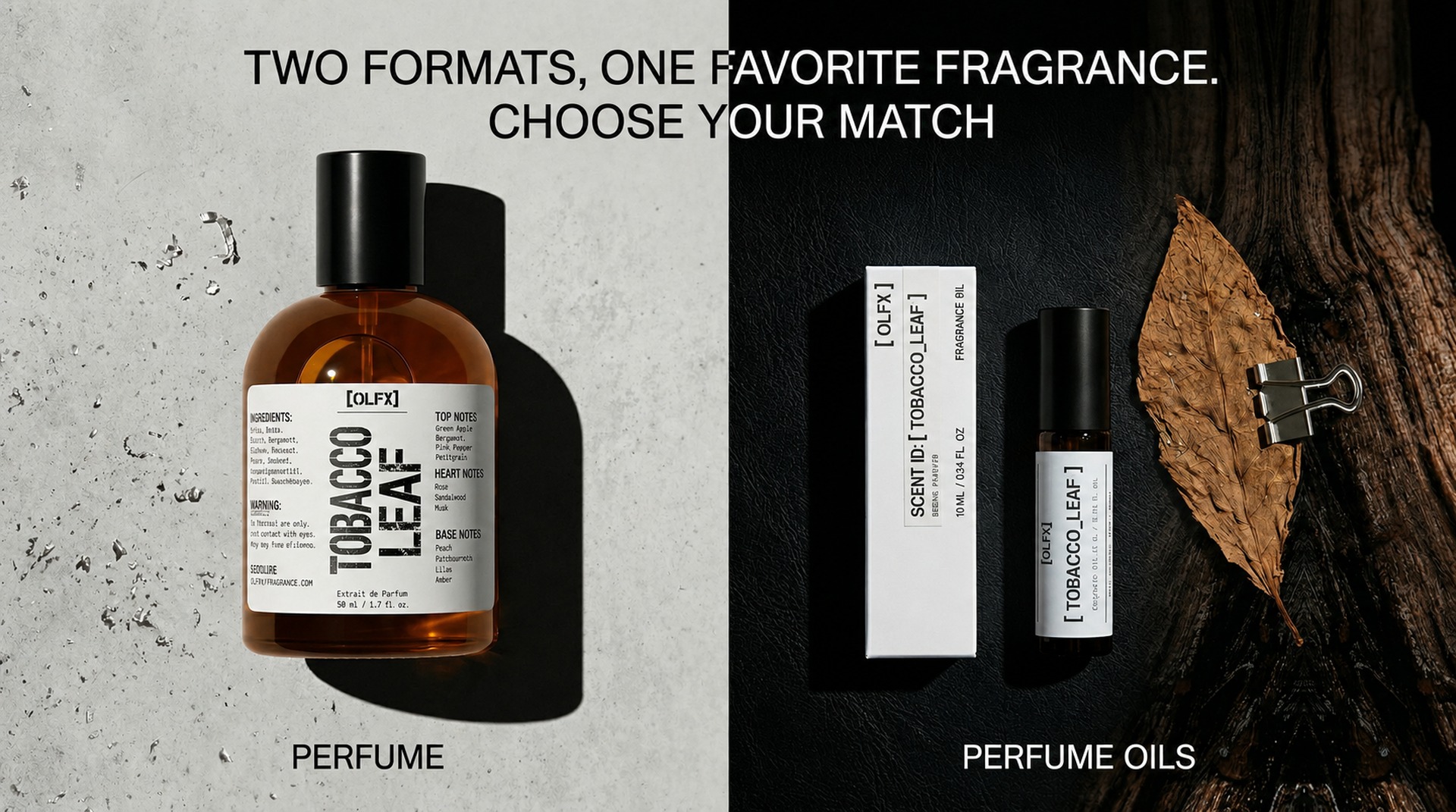
Every OLFx fragrance exists in exactly two formats: a 50 ml Extrait de Parfum spray and a 10 ml roll-on perfume oil — and every product card has a selector to switch between them.
The spray is the classic choice: a full-size bottle for daily rotation, with the presence and projection you expect from an Extrait. The roll-on perfume oil is the quieter path — it applies precisely to pulse points, wears close to the skin, slips into any pocket, and passes airport security without a second thought. Many shoppers use both: the roll-on to audition a scent and for travel, the spray for the references that earn a place in the permanent rotation. The Perfume Oils collection gathers the roll-on side of the catalog, including its alcohol-free and travel-size views.
What are OLFx Discovery sets?
Discovery sets let you combine several references in one order instead of betting on a single bottle: four 10 ml roll-ons or two 50 ml sprays, filled with any fragrances you choose.
This is the recommended entry point for anyone new to the catalog. Blind-buying one full-size fragrance is a gamble; a four-slot roll-on set turns the same decision into a comparison — four scent directions, each with weeks of wear time, before any full-size commitment. The Discovery builder assembles the set from your picks; the Perfume Sampler page explains how to choose slots wisely, and the same mechanism works as a gift set when the recipient's taste is the mystery.
How is the catalog organized?
Three ways in: by scent family, by audience, or by editorial guide — whichever matches what you already know about your taste.
If you think in scent families, the note collections are the natural route: vanilla, cherry, woody, musk, oud, tobacco, gourmand, citrus and a dozen more, each with its own guide to how the note behaves. If you shop by audience, there are curated For Men and For Women collections — though most of the catalog is unisex by design, because the niche houses behind our references dropped the gender split years ago. And if you prefer to be guided, the editorial layer ranks and compares: the best perfume dupes overall, niche references explained, affordable picks, and audience lists for men and women.
Designer vs niche perfume dupes: what's the difference?
Designer perfume dupes follow mass-market originals — Sauvage, Bleu de Chanel, Libre — while niche fragrance dupes follow limited-distribution house originals like Baccarat Rouge 540 or Santal 33. The savings logic differs: designer originals cost $100-200, niche originals $200-500.
The two branches reward different shoppers. Designer perfume dupes make sense when you want a proven crowd-pleaser in a format the original does not offer — an Extrait concentration of a familiar EDT direction, or a roll-on of a scent you already wear. Niche fragrance dupes carry the bigger arithmetic: the originals are priced as luxury objects, sold through boutiques, and rarely available to even sample outside major cities — an interpretation is often the only realistic way to live with that scent direction for a season. The OLFx catalog covers both branches in equal depth, and the editorial guides map each one: the designer perfume guide ranks the most-worn mainstream references, while the niche perfume guide explains the houses behind the cult originals. Composition-wise, the difference is boldness: designer references are engineered to please in a two-second test, niche references are allowed to polarize — which is exactly why niche dupes dominate the most-requested list.
How does OLFx build an interpretation?
Every OLFx interpretation starts from one named original: our perfumers study its accord family — the pillars that make it recognizable — then compose an independent Extrait de Parfum around that same direction and wear-test it on skin before release.
The process is deliberately narrow. We do not chase every launch; a reference enters the catalog when it is asked about by name, when its scent direction is distinct enough to rebuild honestly, and when our composition holds that direction through a full day of wear — morning application to evening drydown. What leaves the lab is a finished fragrance in two formats: the 50 ml Extrait de Parfum spray and the 10 ml roll-on perfume oil, both carrying the same composition. The reference name stays on the card as a navigation aid, not a claim — the fragrance answers for itself on your skin, which is why the Discovery builder exists: testing our reading of an accord side by side with its neighbors is the honest way to judge the work.
Where should a new shopper start?
Start from a fragrance you already know: find its reference in the catalog, read its guide in the Journal, and put it in a Discovery set next to two or three neighbors.
That three-step path — recognize, read, compare — is how the site is designed to be used. The OLFx Journal carries plain-English guides to the most asked-about originals and notes: what Baccarat Rouge 540 actually smells like, why Santal 33 divides rooms, how cherry perfumes differ, what oud really is. Each guide links to the interpretation it discusses, so the distance from curiosity to a testable bottle is two clicks. If you arrive with no reference in mind at all, start with our beginner's guide — it maps the scent families to personality and occasion without assuming any perfume vocabulary.
Why do people choose dupes over originals?
Price is the entry reason — niche originals routinely cost $200 to $500 a bottle — but the deeper reason is freedom to explore: at a fraction of that price, trying a new scent direction stops being a financial decision.
A wardrobe of five scent directions is simply not realistic for most people at original prices. Interpretations change the arithmetic: the same budget that buys one original covers a rotation — a daytime fresh profile, an evening amber, a winter gourmand, a summer citrus, and a wildcard oud. There are honest trade-offs, and we would rather name them than hide them: an interpretation follows the original's direction, not its exact evolution on skin, and originals carry craftsmanship in flacon and finish that a value-focused product does not try to match. Our guide to whether perfume dupes are worth it walks through both sides before you spend anything.
Who is OLFx for?
For fragrance enthusiasts building a rotation without luxury pricing, for newcomers who want a low-risk way into perfumery, and for anyone who knows exactly which original they love and wants its direction in a wearable, affordable form.
The catalog rewards curiosity: the enthusiast finds interpretations of references that are hard to even sample in the US, the newcomer gets guides and Discovery sets instead of blind bets, and the loyalist of one specific original gets a daily-wear version of the direction they already know — plus a roll-on of it for the gym bag, the office drawer, and the carry-on.
What do shoppers ask before buying perfume dupes?
What is the best dupe perfume site?
The best dupe perfume site is the one that names its references openly, shows real product information before purchase, and does not claim its products are identical to the originals.
Judge any store — including this one — by those three tests. At OLFx every card names its reference, states the interpretation relationship plainly, and offers both formats with a visible selector, so what you evaluate before buying is what arrives.
Which company has the best perfume dupes?
No single company wins across all scent directions — the honest comparison is per fragrance: how a specific interpretation handles the reference you care about.
That is why the OLFx catalog is organized by reference rather than by self-ranking, and why the editorial guides compare our interpretations alongside other market alternatives by name instead of pretending they do not exist.
What is the best dupe website?
The best dupe website makes your next step obvious: recognize a reference, understand what you are buying, and test it in a low-risk format before committing.
On OLFx that path is built in — reference-first naming, Journal guides for context, a roll-on format for auditioning, and Discovery sets for comparing several directions in one order.
Where is the best place to buy perfume dupes?
The best place to buy perfume dupes is a store that is transparent about the interpretation relationship and lets you start small instead of forcing a full-bottle bet.
Start with the reference you know, or start with a Discovery set across several directions — either way, the catalog is built so the first purchase teaches you something about your own taste.
Explore the catalog
One hundred and forty original references, two honest formats, and a Journal that explains the fragrance dupes before you buy them. Browse the full perfume collection, build a Discovery set, or start with a guide in the OLFx Journal — the reference you already love is probably here.